Global Aviation Round-Up from Aircraft Value Intelligence
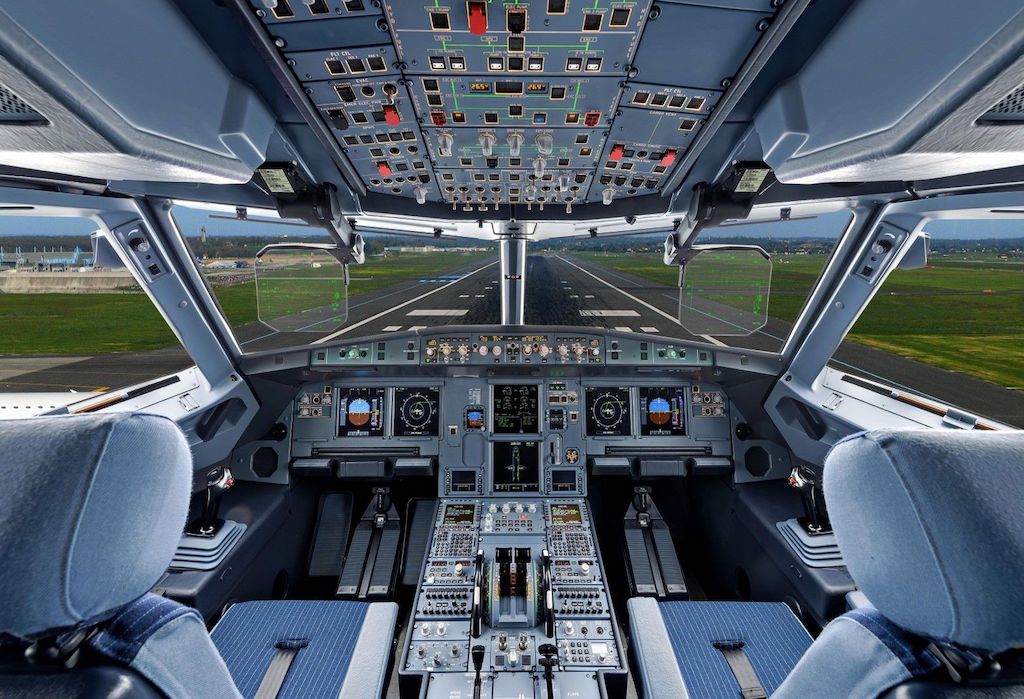
Airbus A320 Cockpit (Photo: Airbus)
If Boeing is rebuilding trust, Airbus is trying to widen the gap.
The European manufacturer has long positioned itself as the leader in cockpit innovation, and its latest avionics roadmap suggests it has no intention of slowing down. From next-generation display systems to AI-driven flight assistance, Airbus is pushing aggressively into what it calls the “connected cockpit” era.
A key advantage lies in architecture. Airbus has been a pioneer of Integrated Modular Avionics, or IMA, which consolidates multiple aircraft functions into shared computing resources.
On aircraft like the A350, this approach allows dozens of systems, from fuel management to environmental controls, to run on a unified platform, reducing weight and improving efficiency.
That foundation is now being expanded. Airbus is developing more powerful IMA platforms capable of handling advanced data analytics and AI applications. These systems are designed to process vast amounts of information in real time, enabling predictive maintenance, adaptive flight management, and enhanced situational awareness.
One of the most visible changes is in cockpit displays. Airbus is moving toward larger, more flexible screens that can be reconfigured dynamically. Pilots will be able to customize layouts based on flight phase or personal preference, blending navigation data, weather, traffic, and system status into a single coherent view.
This is part of a broader push toward “data fusion.” Like Boeing, Airbus is integrating multiple sensor inputs, but it is going further by incorporating external data sources such as satellite weather feeds and air traffic information. The goal is to create a holistic picture of the operating environment, not just the aircraft itself.
Runway safety is another battleground. Airbus is working on next-generation alerting systems that combine onboard sensors with ground-based data to detect potential conflicts. These systems are expected to become standard on new aircraft later this decade, reflecting growing regulatory pressure after a series of high-profile near misses.
Connectivity is a defining theme. Airbus envisions cockpits that are continuously linked to airline operations centers, maintenance teams, and even air traffic control systems. This would allow for real-time updates, collaborative decision-making, and faster responses to disruptions.
A Big Bet on Automation
The company is also investing heavily in automation, but with a different emphasis than Boeing. Airbus has historically embraced higher levels of automation, and its future systems may take on more decision-making responsibilities. For example, AI-driven tools could optimize flight paths, manage energy usage, and even handle certain emergency procedures.
Critically, Airbus is designing these systems with scalability in mind. The same avionics framework can be adapted across different aircraft types, from narrowbody jets to long-haul widebodies. This creates economies of scale and simplifies pilot training, a major selling point for airlines.
Another frontier is single-pilot operations. While still controversial, Airbus has been exploring technologies that could enable reduced-crew flights, particularly during cruise phases. This would require highly reliable automation and robust backup systems, areas where advanced avionics are essential.
The competitive dynamic with Boeing is clear. Where Boeing is emphasizing transparency and pilot control, Airbus is leaning into integration and automation. Both approaches have merit, and the market will ultimately decide which resonates more with airlines and regulators.
This article originally appeared in Aircraft Value Intelligence.
John Persinos is the editor-in-chief of Aircraft Value Intelligence.
 :
: