Global Aviation Round-Up from Aircraft Value Intelligence
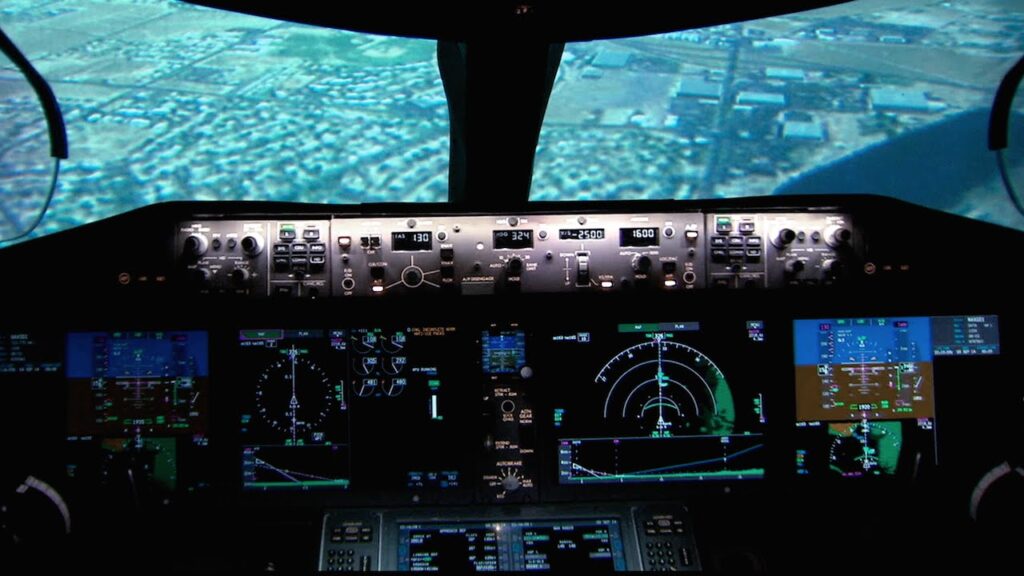
Boeing flight deck with glass digital flight deck changes. (Image: Boeing)
Boeing’s turnaround story has been told through balance sheets, production lines, and congressional hearings. But the real reset may be happening in a less visible place: the cockpit.
After years of scrutiny following the 737 MAX crisis, Boeing is quietly re-architecting its avionics philosophy, betting that smarter, more transparent flight decks will rebuild both pilot trust and regulatory confidence.
The legacy problem is well known. The Maneuvering Characteristics Augmentation System, or MCAS, became a case study in how not to integrate software into a cockpit. It relied on limited sensor input and operated with minimal pilot awareness, contributing to two fatal crashes that grounded the 737 MAX worldwide.
Today’s Boeing avionics push is defined by doing the opposite. At the center is a shift toward “explainable automation.” Instead of layering automation invisibly, Boeing is working to ensure that every automated action is traceable, monitorable, and interruptible.
This includes clearer alert hierarchies, better integration of sensor redundancy, and a renewed emphasis on pilot authority over software logic. Internally, that philosophy is driving updates not just to new aircraft, but to existing fleets through software retrofits and training upgrades.
One major thrust is enhanced sensor fusion. Boeing is moving toward systems that combine inputs from multiple data streams—angle-of-attack sensors, GPS, inertial reference systems, and ADS-B surveillance—to create a more reliable picture of aircraft state. This reduces the risk of single-point failures, the Achilles’ heel of MCAS.
Equally important is how that data is presented. Boeing’s newer cockpit interfaces are evolving toward large-format displays that prioritize contextual awareness over raw data. Instead of flooding pilots with discrete warnings, the system aims to synthesize information into actionable insights. Think fewer alarms, but smarter ones.
Another pillar of Boeing’s strategy is runway safety technology. Industry momentum has been building around cockpit-based alerting systems that warn pilots of hazards like aircraft or vehicles on a runway.
Technologies such as surface-alert systems use GPS and ADS-B data to provide real-time warnings directly in the cockpit, sometimes issuing urgent “traffic on runway” alerts that prompt immediate go-arounds.
Boeing has been working to integrate similar capabilities into its flight decks, aligning with anticipated regulatory pushes. The FAA and global safety bodies have signaled growing interest in mandating such systems, especially as runway incursions remain a persistent risk.
Modular Architectures
The company is also leaning into modular avionics architectures. By decoupling software from hardware, Boeing can roll out updates more quickly and adapt to emerging technologies without requiring major physical redesigns. This mirrors trends in the tech industry and helps future-proof aircraft against rapid changes in AI, connectivity, and cybersecurity.
And AI is increasingly part of the conversation. While Boeing has been cautious about fully autonomous systems, it is exploring AI-assisted decision support tools. These systems would act as copilots in the background, analyzing flight conditions and suggesting actions without taking control. The emphasis, again, is on augmentation rather than replacement.
Certification strategy is another critical piece. Boeing is working more closely with regulators to ensure that new avionics systems meet stricter safety standards. This includes greater transparency in how software is tested, validated, and documented, an area where the company faced heavy criticism in the past.
The broader goal is cultural as much as technical. Boeing is trying to shift from a mindset of minimizing pilot workload to one of maximizing pilot understanding. That may sound subtle, but it represents a fundamental change in how avionics are designed.
This article originally appeared in Aircraft Value Intelligence.
John Persinos is the editor-in-chief of Aircraft Value Intelligence.
 :
: