Global Aviation Round-Up from Aircraft Value Intelligence (AVN)
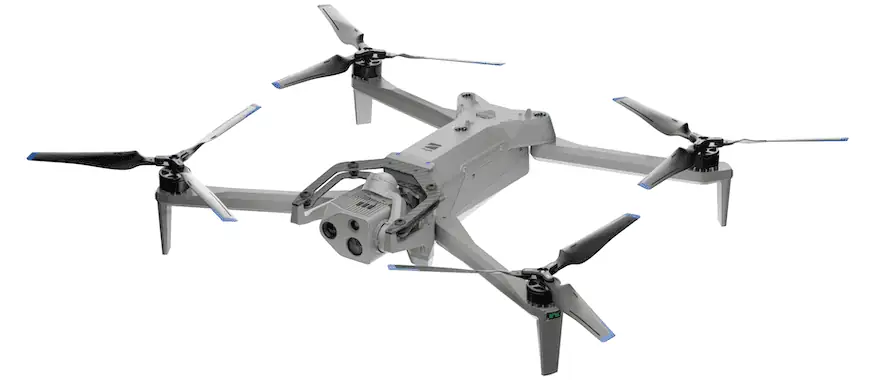
X10D small drone is on DIU’s Blue UAS Cleared List. (Photo: Skydio)
Editor’s Note: To watch a concise video version of this article, click here.
If anyone still doubted that drones have become a defining weapon of modern warfare, the latest strikes deep inside Russia should end the debate.
In one of the war’s largest coordinated aerial attacks, Russia faced a barrage of roughly 660 drones in a single night on June 25. Military airfields, logistics centers and other strategic targets were hit across a vast stretch of territory, from Moscow to Crimea.
The operation demonstrated just how far unmanned aircraft have come. Small, inexpensive and difficult to intercept, today’s drones can slip through sophisticated air defenses and strike hundreds of miles beyond the front.
That changes the military equation. For decades, air power depended on fighter jets, bombers and costly precision-guided missiles. Those platforms remain indispensable, but commanders are increasingly confronting a different threat: large numbers of relatively cheap drones operating together.
A swarm can overwhelm even advanced defenses, forcing an opponent to expend expensive interceptors against aircraft that may cost only a tiny fraction as much to build.
The battlefields of Ukraine and the Middle East have become laboratories for this new style of “asymmetrical” warfare. New tactics appear almost as quickly as countermeasures. Militaries are rewriting doctrine while conflicts are still unfolding.
The technology driving this shift didn’t emerge overnight. Better batteries, lighter composite materials, improved navigation systems and rapid advances in artificial intelligence have dramatically expanded what unmanned aircraft can accomplish. Those same innovations are now spilling into the civilian economy.
Not long ago, drones were viewed largely as hobbyist gadgets or specialized tools for aerial photography. Today they are becoming workhorses across a growing list of industries.
Market researchers expect the global commercial drone business to surpass $65 billion a year before the decade is over. Millions of unmanned aircraft could eventually be flying routine missions that once required helicopters, trucks or teams of field workers.
Package delivery is one of the most visible examples. Companies continue testing drone networks capable of carrying small shipments directly to customers in a fraction of the time required by traditional delivery methods.
Utilities are using drones to inspect transmission lines without putting crews in dangerous locations. Farmers rely on aerial surveys to spot irrigation problems, monitor crop health and apply fertilizers or pesticides only where they’re needed, reducing both costs and waste.
Construction firms can map large job sites in a matter of hours instead of days. Mining companies use unmanned aircraft to survey remote terrain with remarkable precision.
Fire departments, search-and-rescue teams and emergency medical responders increasingly depend on drones to locate victims, assess disaster zones and transport critical supplies into areas that are difficult to reach by road.
Insurance adjusters have also embraced aerial imaging to speed damage assessments after hurricanes, tornadoes and other natural disasters.
The Federal Aviation Administration (FAA) expects the U.S. commercial drone fleet to continue expanding well beyond one million registered aircraft. Progress in detect-and-avoid technology, autonomous flight software and airspace management is steadily moving routine drone operations closer to everyday reality, even in crowded urban environments.
Governments are investing just as heavily. The Pentagon’s latest budget proposal sets aside more than $53 billion for autonomous systems and related technologies, including roughly $17 billion for unmanned platforms that operate in the air, on land, at sea and beneath the ocean’s surface.
Rather than relying exclusively on a relatively small number of extraordinarily expensive platforms, defense planners want larger fleets of lower-cost systems that can be produced quickly, deployed in volume and replaced when necessary.
The conversation inside military headquarters has shifted accordingly. The question is no longer whether drones will play a central role in future conflicts. It’s how quickly nations can scale production, incorporate artificial intelligence and develop effective defenses against increasingly capable unmanned aircraft.
The Industry-Wide Ramifications
The effects extend well beyond defense contractors. Aircraft manufacturers, avionics suppliers, software companies and logistics providers are all investing heavily in unmanned aviation. Cargo drones are being developed to move high-value freight between airports and distribution centers without onboard crews, potentially reshaping regional cargo networks.
Meanwhile, electric vertical takeoff and landing aircraft, better known as eVTOLs or air taxis, continue progressing through certification programs. Although commercial service remains several years away, the long-term vision of autonomous urban air mobility is becoming more realistic with each technological milestone.
Artificial intelligence is accelerating nearly every aspect of this evolution. Modern drones can recognize terrain, avoid obstacles, identify objects and complete increasingly complex missions with minimal human intervention. As autonomy improves, unmanned aircraft will become even more capable and more deeply woven into the broader aviation system.
The economic impact reaches far beyond aerospace itself. Demand is rising for advanced sensors, batteries, communications equipment and AI software, creating opportunities for companies throughout the aviation technology supply chain.
John Persinos is the editor-in-chief of Aircraft Value Intelligence.
 :
: