Global Avionics Round-Up from Aircraft Value News (AVN)
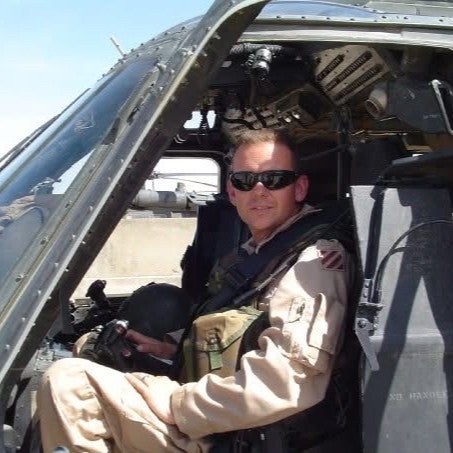
Tim Lilley, an influential aviation safety and policy expert with decades of hands-on experience from both military and commercial aviation. (Photo: Lilley’s personal LinkedIn webpage)
Editor’s Note: This week, John Persinos interviewed Tim Lilley, a highly influential aviation safety and policy expert. Tim brings decades of hands-on experience from both military and commercial aviation. A commercial jet pilot and U.S. Army veteran, he previously flew Black Hawk helicopters in demanding operational environments, developing expertise in flight operations, risk management, and mission execution.
Today, Tim Lilley is a sought-after authority on aviation safety, regulatory policy, pilot training, and emerging technology. The following is a transcript of his Q&A with John, edited for concision. Questions are in bold.
Air traffic control in America has become dysfunctional. The FAA is under pressure to modernize ATC systems while maintaining safety in increasingly congested airspace. What technologies or policy changes do you believe could make the biggest difference over the next decade?
I would not characterize every part of the air traffic system as dysfunctional, but it is certainly under increasing strain. Over four decades in aviation, I’ve watched the system become more complex, more congested, and more dependent on the timely flow of information.
Whether I was flying Army helicopters, air ambulance missions, regional airline routes, or fractional jets, the common thread was that safety depended on having accurate information and multiple layers of protection. The technologies that will make the biggest difference are those that improve situational awareness, reduce ambiguity, and help pilots, controllers, and operators identify risk before it becomes a conflict.
That includes better integration of operational data, stronger safety management processes, modern collision avoidance technology, and improved cockpit traffic awareness. Recent investigations have also reinforced that we can’t rely too heavily on visual acquisition alone in complex airspace. Modernization should not simply make the system more efficient. It should make the system more resilient.
Throughout my career, one lesson has remained constant: safety comes from layers. Technology creates stronger layers, but the foundation is still people, procedures, training, and a culture that identifies and addresses risk before an accident occurs.
Artificial intelligence is influencing everything from predictive maintenance to flight planning and safety monitoring. Where do you see AI delivering the most value, and where should the industry proceed with caution?
Throughout my career, I’ve watched aviation become increasingly data driven. Today we collect more operational information than we could have imagined thirty years ago. AI has tremendous potential to help us identify patterns, predict maintenance issues, improve safety monitoring, and recognize emerging risks that might otherwise go unnoticed.
Where I would proceed with caution is allowing technology to replace human judgment. Aviation has always depended on trained professionals making sound decisions in dynamic environments. The goal should be to use AI to help people make better decisions, not to remove people from the decision-making process.
Every major advancement in aviation has improved safety when it strengthened human performance rather than attempted to replace it. I believe AI should be viewed through that same lens.
Recent fatal air incidents have renewed public scrutiny of aviation safety, despite commercial air travel remaining, statistically speaking, quite safe. How can airlines, regulators, and manufacturers better communicate risk and maintain public confidence?
I have extensive experience participating in preflight planning, post-flight debriefs, safety reviews, and discussions following accidents and incidents. One thing I’ve learned is that confidence comes from honesty.
Commercial aviation remains extraordinarily safe, but that does not mean we should accept preventable risk. The public understands that no complex transportation system can eliminate risk entirely. What people want to know is whether hazards are being identified, whether lessons are being learned, and whether meaningful action is being taken.
The best way to maintain public confidence is through transparency. Explain what happened, explain what is being changed, and demonstrate how those changes will improve safety. The public does not need reassurance that sounds defensive. The public needs evidence that the industry remains committed to continuous improvement.
Aircraft are becoming more connected than ever, creating new efficiencies but also expanding cybersecurity risks. How concerned should the industry be about cyber threats to flight operations, and what steps are most critical to strengthen resilience?
I do not think cyber risk is overblown, but I also want to be careful not to speak beyond my expertise.
What I can say is that aviation systems are more connected today than at any point in my career. That connectivity creates tremendous benefits, but it also creates new vulnerabilities. Cybersecurity should be viewed as part of operational resilience rather than simply an IT issue.
As a pilot, I have always relied on the aviation industry to identify emerging risks, understand them, and build appropriate safeguards into the system. Cybersecurity should be approached with that same level of discipline and vigilance.
As airlines adopt increasingly sophisticated cockpit automation and decision-support tools, how should pilot training evolve to ensure aviators remain proficient when technology fails or unexpected situations arise?
Every generation of pilots has heard concerns that new technology would weaken fundamental flying skills. I’ve flown aircraft with relatively simple systems and aircraft with highly sophisticated automation. What I’ve learned is that technology changes the skills we emphasize, but it does not eliminate the need for proficiency.
The fundamentals of aviation have not changed. Pilots still need situational awareness, sound judgment, effective communication, disciplined decision-making, and a thorough understanding of their aircraft and operating environment.
Technology is most valuable when it reinforces those fundamentals. Training should ensure that pilots understand what automation is doing, what it is not doing, and when intervention is necessary. Pilots must remain proficient in hand flying, abnormal operations, automation failures, and decision-making under pressure.
The pilot remains the final layer of judgment when something unexpected occurs, and training should continue to reflect that reality.
You’ve flown both military helicopters and commercial jets during periods of significant technological change. Which emerging technology or regulatory trend do you think aviation professionals are underestimating today, and why?
Having operated across military aviation, helicopter operations, air ambulance flying, regional airlines, general aviation, and fractional aviation, I’ve seen how differently various segments of aviation interact within the same airspace system.
The trend I believe we may be underestimating is the challenge of safely integrating an increasingly diverse set of airspace users into an increasingly crowded environment. Commercial aircraft, military aircraft, helicopters, business aviation, general aviation, and eventually larger numbers of unmanned systems will all be sharing the same airspace.
Addressing that challenge will require more than any single technology. It will require layered traffic awareness, modern collision avoidance systems, better information sharing, stronger safety management, and thoughtful oversight of operational exceptions and waivers.
Over forty years in aviation, the most important lesson I’ve learned is that accidents rarely result from the failure of a single layer. They occur when multiple layers fail simultaneously. The future of aviation safety will depend on strengthening those layers and ensuring they work together effectively.
Thanks for your time.
John Persinos is the editor-in-chief of Aircraft Value Intelligence.
 :
: