Global Avionics Round-Up from Aircraft Value News (AVN)
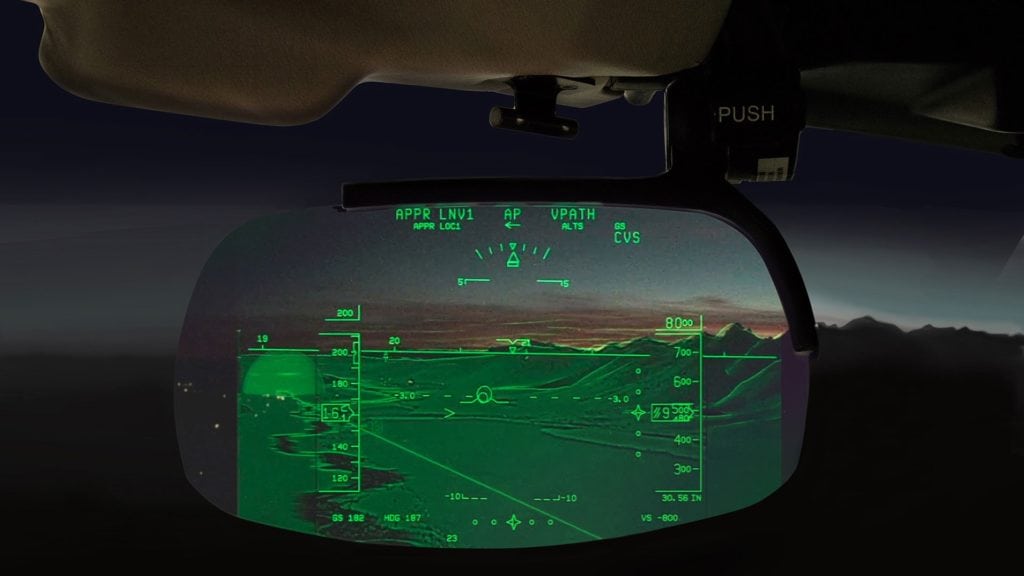
Rockwell Collins’ combined vision system, which merges enhanced and synthetic vision into one display. (Rockwell Collins)
Aircraft operators have always chased greater safety and reliability. What once was good enough is quickly becoming standard in many fleets. One of the most significant changes taking hold in the industry today is the rapid adoption of enhanced vision systems.
These avionics packages rely on infrared sensors and real time digital overlays to help pilots see in low visibility conditions. In practical terms, operators can now land in weather conditions that would previously have required diversion. This new capability is translating into higher aircraft utilization and, as a result, stronger valuations and more favorable lease rates.
Enhanced vision is no longer limited to business jets. Originally most common on Bombardier and Embraer business aircraft, enhanced vision systems are working their way into regional and narrowbody airliners.
ATR turboprops are being outfitted with upgraded sensor suites to handle operations in mountainous terrain and unpredictable weather. Less weather-related downtime means operators can justify paying higher lease rates because revenue earning hours increase.
The Value Equation for Airlines and Lessors
Valuations in the aircraft market live and die by utilization. Airlines and lessors put a premium on aircraft that can be counted on to produce revenue consistently. Enhanced vision reduces weather related delays and cancellations.
When an ATR-72 or an Embraer -E2 can safely operate in more challenging conditions, operators see measurable gains. Those gains show up on balance sheets as improved revenue projections and lower cost of irregular operations.
Lessor firms that invest in retrofitting older aircraft with enhanced vision avionics find that valuations increase significantly. On the secondary market a B737 or an A320 that has modern sensor systems commands more interest from airlines seeking reliability. The confidence that comes with these systems has an especially strong impact on valuations for aircraft operating in regions prone to fog or heavy seasonal weather.
Leasing for the Future
Finance executives at airline lessors describe the demand shift as more than incremental. They point to a new tier of value attribution tied directly to avionics. Where a decade ago the market saw avionics simply as compliance equipment for meeting regulatory requirements, today advanced vision is a differentiator that draws higher lease rate offers from carriers.
For example, a Bombardier Challenger or Gulfstream variant equipped with the latest enhanced vision suite draws stronger bids from fractional operators and charter companies.
These buyers value expanded mission capability and will often pay a lease premium compared to similar aircraft without the technology. Lessors see this trend and are increasingly factoring avionics upgrades into initial acquisition strategies.
Boeing and Airbus Weigh In
When it comes to mainline airliners, both Boeing and Airbus have been integrating advanced vision modules as part of broader digital cockpit upgrades. Airlines evaluating fleet replacements or expansions now review avionics features with new scrutiny.
An A320neo equipped with next generation vision is more attractive to an operator in the Northeast corridor than an older generation model without it.
Similarly, a B737 MAX with the newest enhanced vision option can justify a narrower gap between the cost of ownership and the lease rates carriers are willing to pay.
Airlines are willing to commit to longer lease terms when they feel confident that avionics features will keep the aircraft competitive through multiple market cycles. That confidence translates into more predictable income streams for lessors.
On the valuation side, enhanced vision plays a role similar to fuel efficiency upgrades. It improves residual values at the end of a lease due to broader appeal in secondary markets.
Regional and Turboprop Impact
Regional aircraft have historically had lower lease rates than larger jets. The broader adoption of enhanced avionics is beginning to change that. ATR turboprops, often viewed primarily as cost focused machines for short-haul flights, now include vision systems that support safer operations in complex environments.
Airlines serving island networks or remote destinations find that these enhanced systems reduce cancellations and improve on-time performance. That operational improvement raises the perceived value of the aircraft and supports stronger lease rate pricing.
Similarly, Embraer’s E-Jet family with advanced vision packages attracts interest across regional and mainline operators. Those avionics upgrades help bridge the traditional valuation gap between regional jets and larger narrowbodies. Investors and valuation analysts are increasingly segregating regional aircraft based on avionics features rather than treating all jets in a given class as equal.
What Comes Next in Avionics and Valuation
The ripple effect of enhanced vision systems extends beyond immediate lease rate impact. As data from real world operations becomes more robust, insurers are adjusting risk profiles downward.
Lower insurance premiums help airlines manage operating costs and put upward pressure on aircraft values. Lessor firms that adopt enhanced vision avionics across their portfolios report lower downtime and reduced maintenance reserves tied to weather events.
Looking ahead, industry observers expect carriers to request integrated avionics suites that combine enhanced vision with synthetic terrain and predictive analytics. The ability to see not just current conditions but anticipate terrain or weather-related risk is starting to shape retention strategies and fleet planning. Airbus and Boeing are both advancing these systems across their widebody and narrowbody platforms.
Enhanced vision is not a niche anymore. It has become a core component in the leasing and valuation conversation as safety and utilization increasingly drive fleet decisions.
This article first appeared in our partner publication, Aircraft Value News.
John Persinos is the editor-in-chief of Aircraft Value News.