Global Avionics Round-Up from Aircraft Value News (AVN)
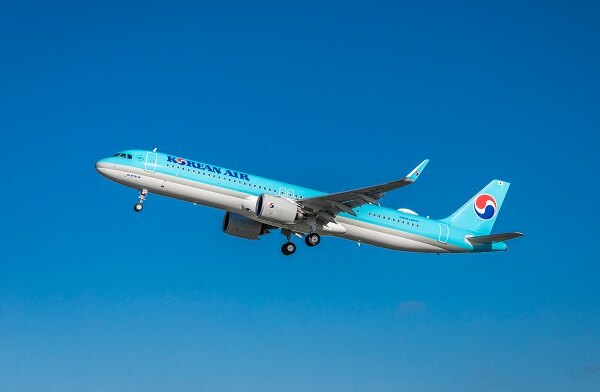
An Airbus A321neo (Photo: Korean Air)
The center of gravity in commercial aviation has swung decisively toward the single aisle segment, and nowhere is this more evident than in the race to control the next generation of narrowbody avionics.
The A321neo and B737 MAX 8 now define the marketplace, and their avionics architectures have become decisive factors in value acceleration, lease rate escalation, and airline fleet strategy.
At the heart of the A321neo’s rise is its avionics commonality with the broader Airbus narrowbody family. This commonality allows pilots to transition across types with reduced training time, an advantage that has grown more valuable as labor shortages complicate crew planning.
Airlines operating A320neos and A321neos can maintain a unified operating philosophy across their fleets, lowering costs and strengthening dispatch reliability. That efficiency becomes even more strategic with the A321LR and A321XLR, whose long-range missions demand avionics redundancy and resilience typically associated with widebodies.
Airbus continues to refine flight deck enhancements that support extended range narrowbody operations, including upgraded predictive wind tools, advanced real time monitoring, and improved FMS optimization.
These capabilities allow the A321neo family to fly transatlantic and deep intra-Asia routes once reserved for twin aisles. As a result, values for the A321neo have surged, with lease rates climbing faster than any other narrowbody variant in global circulation.
The A320neo benefits from many of the same avionics features and is riding a powerful scarcity wave. Airlines unable to secure A321neo slots are turning to the A320neo as a near-term substitute, and lessors have responded by elevating lease rate factors on younger vintages.
The Long Runway for Value Preservation
The absence of imminent technological disruption gives current generation avionics a long runway for value preservation. With next generation propulsion concepts not expected until the late 2030s, the A320neo and A321neo will hold market leadership for years.
Boeing’s narrowbody portfolio tells a parallel story. The 737 MAX 8 is gaining value momentum as operators rely on its updated flight deck integration, advanced navigation tools, and improved data management systems.
Although the MAX family carries a different cockpit philosophy than the Airbus family, airlines with significant Boeing exposure find the MAX 8’s avionics suite sufficiently advanced to meet evolving global airspace requirements. The aircraft’s rising lease rates reflect this capability.
The MAX 8 cannot match the A321XLR’s extreme range, but it delivers strong economics for high frequency short and medium haul routes and fits seamlessly into carrier networks built around Boeing operating procedures.
The avionics rivalry between Airbus and Boeing also affects older narrowbodies. The A321ceo and 737 900ER lack the digital depth of their successors, yet persistent delivery delays for new aircraft have revived their value.
Airlines that need immediate capacity are extending leases and investing in avionics refresh programs to keep these older assets compliant with new airspace rules. Their long-term value trajectory remains limited, but the short-term uplift is meaningful.
A more subtle trend is emerging as well. Airlines are beginning to evaluate avionics scalability as a core metric in fleet decisions. The ability to integrate evolving satcom, surveillance, and automation tools determines an aircraft’s long-term flexibility.
The A321neo and MAX 8 both offer this scalability, which strengthens their base values and makes them safer bets for lessors operating in a volatile interest rate environment.
Avionics have moved from being a behind the scenes technical feature to becoming a driver of narrowbody economics. As Airbus and Boeing struggle to meet demand, the aircraft with the strongest avionics ecosystems are capturing the most value. The narrowbody supercycle is underway, and cockpit technology is steering it.
This article originally appeared in Aircraft Value News.
John Persinos is the editor-in-chief of Aircraft Value News.